[Public Diplomacy] The territorial-administrative structure of Turkey (Part 3/8)
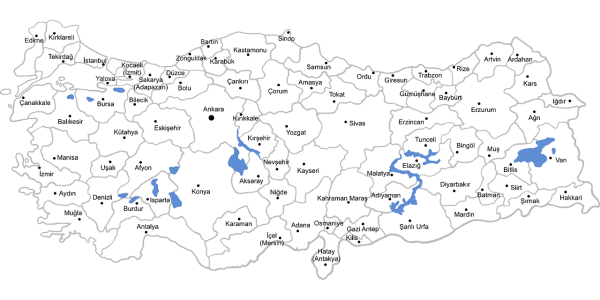
Although the exact number of Istanbulites is subject to discussions, official figures assume that approximately 16 million out of 84.711.239 million inhabitants of Turkey live in Istanbul, which makes up to 20 % of the total population. Together with 29 other Turkish cities (şehir), Istanbul is attributed the status of a metropolis (büyükşehir, literally: big city). As Istanbul comprises 39 districts (ilçe) with their own, respective municipal sub-governments (belediye), each presided by a mayor (belediyebaşkanı), the metropolitan government (büyükşehir belediyesi) of the whole metropolis is represented by the metropolitan mayor (büyükşehir belediyebaşkanı). Currently (January 2021), this position is filled by Ekrem İmamoğlu from the oppositional CHP (as initially mentioned).

[Public Diplomacy] Turkish-Bosnian sibling cities and a semantic problem with ‚populism'(Part 2/8)

The stress of the Ottoman past in the official Turkish actors' cultural initiatives is the reason why their activities have been classified cultural diplomacy from the very beginning of their visibility in the Balkans. The year 2009, when the first branch of the Yunus-Emre-Cultural Centers opened its doors in the Bosnian capital Sarajevo, can be seen as a first significant benchmark. However, Turkish culture and cultural diplomacy are not only promoted in direct and subtle ways by offical representatives of the Turkish state: from the point of view of soft power – which according to Joseph Nye needs to work subtly in order to be successful – the popularity of Turkish TV-series was (and still is) of enormous relevance. Especially the latter aspect implies that an understanding of the appeal of “Turkish culture” in the Balkans cannot solely be explained by studying the ruling regime's activities: much broader strata of the involved societies (e.g. TV consumers/prosumers in Bosnia and Turkey) and their various discoursive contexts are, as informal actors, involved in the process of cultural diplomacy.

[Public Diplomacy] Can networks of local governments challenge the rise of cross-border neo-populism? (Part 1/8)

In this contribution, I will discuss the possibilities and limits of town twinnings, city diplomacy and coalitions of mayors as possible solutions to the global rise of populism and neo-populism. I will focus the case of Turkish-Bosnian (Bosniak) town twinnings, which will be called sibling cities throughout the text: this metaphore better responds to the Turkish notion of kardeş şehir, the Bosnian notion pobratimlja, and the asymmetrical relationship of these arrangements. These recent forms of town twinnings are deviant from many other, well-known examples -- mainly for being dominated by authoritarian, right-wing and neo-populist actors. Populism, despite being a global trend, is often perceived as a phenomenon that occurs inside a given nation-state. However, cross-border coalitions of municipalities between Bosnia-Herzegovina and Turkey together form a polity beyond the level of national governments; at once, they remain being heavily shaped by the latter. Alongside with this phenomenon, a new form of cross-border neo-populism is emerging: unlike „classical“ populism, neo-populism addresses more than one populus (people).

[Geschichte] Kliofest Zagreb: „Wider den historischen Revisionismus, für die Revision historischer Erkenntnis“

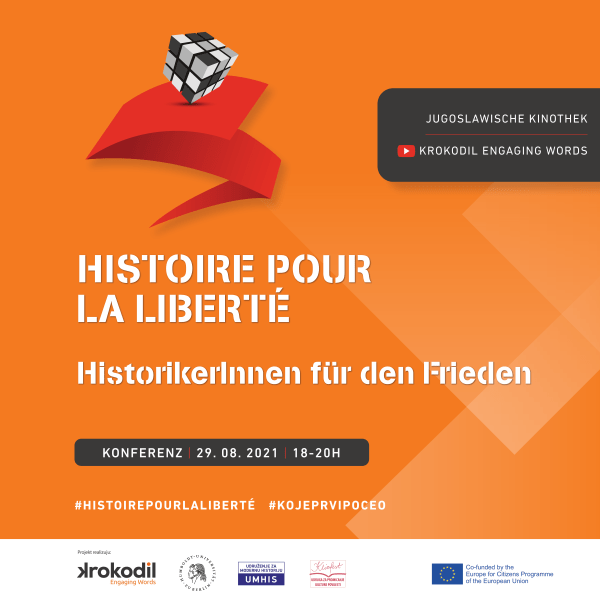
Im Rahmen des Kliofests, das bereits am Vortag begonnen hatte, fanden mehrere Einzelveranstaltungen zu ganz unterschiedlichen Themen statt. Unser Teil, der von 11:00 bis 14:00 Uhr dauerte, trug den Titel "WIDER den historischen Revisionismus, FÜR die Revision historischer Erkenntnis" (PROTIV historijskog revizionizma, ZA reviziju povijesnih spoznaja). Dieses Thema und die Teilveranstaltung waren wiederum Teil eines größeren Projekts mit dem Titel Histoire pour la liberté (Geschichte für die Freiheit), das sich mit dem weiteren Kontext des geschichtlichen Revisionismus in der Region (sowie darüber hinaus / in Deutschland) befasst. Von der großen Aktualität und Relevanz des Themas zeugen die sich überschlagenden Nachrichten, Film- und Serienproduktionen in der Region, die zu großen öffentlichen Debatten und Verwerfungen führen. Wie Dubravka Stojanović aus Belgrad es in ihrem Beitrag pointiert hat: damit wird der Grund bereitet für Konflikte und schlimmstenfalls "die psychologische Möglichkeit neuer Probleme" geschaffen.

[Public Diplomacy] The neo-right wing trend across Europe and Turkey: can coalitions of municipal leaders challenge populism?

In this contribution, I will discuss if political coalitions of liberal-minded local governments can challenge the rise of neo-right wing populism at the state level. I was intrigued and motivated by Sezin Öney's article from 24.12.2019, published in English on Gazete Duvar. [1] In her article, Öney comments on the recent alliance of metropolitan mayors... Continue Reading →

[Öffentliche Meinungen] Ein Erfolg für Wikipedia? Zensur und OSN in der Türkei

Nach 990 Tagen Zensur ist die Wikipedia wieder ohne VPN-Client in der Türkei zugänglich - was mich als Wikipedianer natürlich freut, aber besonders freut es mich für türkische Userinnen, die das als Teilerfolg gegen das nervöse Regime verbuchen. Die Wikipedia ist ein höchst „gefährliches“ Instrument, vor dem sich sich Regime fürchten, die ihre Wirklichkeiten lieber... Continue Reading →

[Öffentliche Meinungen] Demagogie im Serbien (1980-1990er Jahre)

Mythenanalyse und religiös verbrämte Tropen Die Ordnung meiner geplanten Beitragsserie über Antisemitismus, Sorosphobie und Neo-Re-Bewegungen gerät etwas ausführlicher und anders als ursprünglich geplant. Um mich der Frage anzunähern, wie und wieso Antisemitismus und Sorosphobie in Neo-Re-Bewegungen so „gut“ funktionieren, und warum es, auch nach den unsäglichen Verbrechen der Nazis, immer noch möglich ist, mit antijüdischen... Continue Reading →

[Öffentliche Meinungen] Antisemitismus, Sorosphobie und Neo-Re (I)

Einleitung Dieser Tage erreichen uns aus der Türkei keine hoffnungsvollen Nachrichten: erneut ist es zu einer Repressionswelle unter Oppositionspolitiker_innen, Journalist_innen und Akademiker_innen gekommen. Diese Verfolgungen stellen nichts neues dar und gehören zum Standardrepertoire (neo-)populistischer Ein-Mann-Regime. (Neo-)populistische Regime sind dringend darauf angewiesen, dass es nur eine mögliche Sicht auf die Wirklichkeit gibt, und zweitens müssen sie... Continue Reading →

[Öffentliche Diplomatie] Türkische Kulturdiplomatie in Montenegro: Eindrücke von einem Workshop in Podgorica und einer Exkursion nach Ulcinj

Ein Workshop in Podgorica und eine Exkursion nach Ulcinj Wir, die Teilnehmer des Workshops "Discursive inclusion and exclusion of Muslims in the Balkans" (9.-11.7.2018), haben am zweiten Tag unseres Workshops eine Exkursion in die nahegelegene Küstenstadt Ulcinj unternommen. In Ulcinj haben wir mit Vertretern der lokalen Verwaltung, der Islamischen Gemeinschaft, des Mediensektors und von Nichtregierungsorganisationen... Continue Reading →

[Dissertation] The discoursive ‚running to and fro‘ between Sarajevo and Istanbul: a Bosniak-Turkish communicative figuration in the context of gentrificating the Ottoman hinterland

  Research Question My central research question is how the experience and collective memory of (mostly forced) Muslim refugeeness — known as muhacirlik in Turkish — is interrelated with the rehabilitation and gentrification of the Ottoman past in significant parts of the political and societal sphere of Turkey and the „Western Balkans“ in the past... Continue Reading →

[Migration] The Rediscovery of the Balkans? A Bosniak-Turkish Figuration in the Third Space Between Istanbul and Sarajevo

Thomas Schad: The Rediscovery of the Balkans? A Bosniak-Turkish Figuration in the Third Space Between Istanbul and Sarajevo This Working Paper delienates the construction of diasporic spaces by Bosniak communities residing in İstanbul and İzmir. Based on an ongoing multilocal anthropological field research conducted by Thomas Schad, a PhD Candidate in Berlin Graduate School Muslim... Continue Reading →

Website bereitgestellt von WordPress.com.

Nach oben ↑