Ima neka tajna veza ist der Titel eines sehr jugoslawischen Songs, den ich erst in den 1990er Jahren kennengelernt habe, zur Zeit des Bosnienkrieges, als immer mehr Kassetten und CDs aus der zerschossenen Jugosphäre zu uns kamen. Damals kam auch die blaue Bijelo Dugme CD. Der Song Ima neka tajna veza wurde auch, aber nicht... Continue Reading →
[Public Diplomacy] ‚Hemşehrilik‘ (fellow-townsmenship) and the venture of Bosnian-Turkish sibling cities (Part 5/8)
As this example shows, being different from the others -- as Muhacir -- does not mean being other than Turkish: it rather means that there are one or more deep societal conflicts about the understanding how to be Turkish, and/or who determines what Turkish and Turkish culture would possibly be. I was told in practically every single interview with Bosniak Muhacirs (and their offspring) in Turkey what they perceive of as the most fundamental difference between themselves and 'the others': they would never -- down "to the seventh or ninth generation" -- ever marry their akraba (= relatives). Cousin marriage -- in the Arabic speaking Middle East described as bint 'amm marriage by anthropologists -- is in Turkey known as akraba evliliği. It is considered to be an eastern practice by Bosniak Muhacir people in Turkey, which corresponds to the fact that in the Balkans, cousin marriage is practically taboo and considered incestuous. Hence, the reactions of many Bosniak Muhacir people to the fact that some of their Anatolian compatriots practice it, often were expressed in extreme disgust. "Bunlar kültürsüz" -- they have no culture -- was often added as an explanatory comment. The importance of this societal conflict, where representatives of both sides can claim their own establishedness and the other side's outsiderness, should not be underestimated in the way how figurative kinship is established through sibling cities (kardeş şehir), either by representatives of the ruling party, or by Muhacir groups: even though representatives of both groups use the same kinship metaphores (like sibling / kardeş) and speak about culture (kültür), they may fundamentally disagree over the meaning and the role of their agnatic or figurative akraba (kinship) -- as the example of akraba evliliği shows. In the same vein, there are fundamental disagreements over the notion of culture, and the way how culture is brokered by official Turkish cultural centers and initiatives on the market of public opinions in the Balkans.
[Public Diplomacy] Turkish-Bosnian sibling cities and a semantic problem with ‚populism'(Part 2/8)
The stress of the Ottoman past in the official Turkish actors' cultural initiatives is the reason why their activities have been classified cultural diplomacy from the very beginning of their visibility in the Balkans. The year 2009, when the first branch of the Yunus-Emre-Cultural Centers opened its doors in the Bosnian capital Sarajevo, can be seen as a first significant benchmark. However, Turkish culture and cultural diplomacy are not only promoted in direct and subtle ways by offical representatives of the Turkish state: from the point of view of soft power – which according to Joseph Nye needs to work subtly in order to be successful – the popularity of Turkish TV-series was (and still is) of enormous relevance. Especially the latter aspect implies that an understanding of the appeal of “Turkish culture” in the Balkans cannot solely be explained by studying the ruling regime's activities: much broader strata of the involved societies (e.g. TV consumers/prosumers in Bosnia and Turkey) and their various discoursive contexts are, as informal actors, involved in the process of cultural diplomacy.
[Public Diplomacy] Can networks of local governments challenge the rise of cross-border neo-populism? (Part 1/8)
In this contribution, I will discuss the possibilities and limits of town twinnings, city diplomacy and coalitions of mayors as possible solutions to the global rise of populism and neo-populism. I will focus the case of Turkish-Bosnian (Bosniak) town twinnings, which will be called sibling cities throughout the text: this metaphore better responds to the Turkish notion of kardeş şehir, the Bosnian notion pobratimlja, and the asymmetrical relationship of these arrangements. These recent forms of town twinnings are deviant from many other, well-known examples -- mainly for being dominated by authoritarian, right-wing and neo-populist actors. Populism, despite being a global trend, is often perceived as a phenomenon that occurs inside a given nation-state. However, cross-border coalitions of municipalities between Bosnia-Herzegovina and Turkey together form a polity beyond the level of national governments; at once, they remain being heavily shaped by the latter. Alongside with this phenomenon, a new form of cross-border neo-populism is emerging: unlike „classical“ populism, neo-populism addresses more than one populus (people).
[Bosnia] Bosnien in Berlin: ein Buchprojekt
Die Idee zum Buch „Bosnien in Berlin“ ist direkt im Anschluss an eine Podiumsdiskussion im Rahmen der Berlin Science Week 2020 @ HU entstanden. Dort flossen unter der Überschrift „Erinnern, Erforschen, Aufarbeiten. Srebrenica in Berlin. Junge Berliner*Innen aus Bosnien oder wie aus Traumata Forschungsthemen werden können.“ fünf verschiedene Perspektiven junger Frauen aus Bosnien-Herzegowina, Serbien und Deutschland zusammen. Trotz des unterschiedlichen Alters und der Verschiedenheit ihrer Erlebnisse teilten sich alle Sprecherinnen eine Gemeinsamkeit: sowohl autobiographisch als auch wissenschaftlich setzen sie sich mit dem Thema des Bosnienkrieges auseinander. Dieser fand vor 25 Jahren sein Ende, nachdem er mit dem Genozid von Srebrenica im Juli 1995 noch einen grausigen Höhepunkt genommen hatte, was auch der Anlass für dieses und ein weiteres Panel der Berlin Science Week war, die beide vom Lehrstuhl der Südslawistik der HU Berlin ausgerichtet und vom Südosteuropa- Historiker Thomas Schad moderiert wurden. Das über die Plattform YouTube abrufbare Gespräch dauerte insgesamt zwei Stunden – dennoch hatten alle Beteiligten nach der Veranstaltung das Gefühl, dass ihre Geschichten noch längst nicht zu Ende erzählt worden waren. Ermutigt durch das große öffentliche Interesse und das positive Feedback war schnell die Entscheidung gereift: Dem Erzähldrang soll nachgegangen, ein vielstimmiges Buch soll geschrieben werden. Sein Arbeitstitel lautet im Moment „Bosnien in Berlin“.
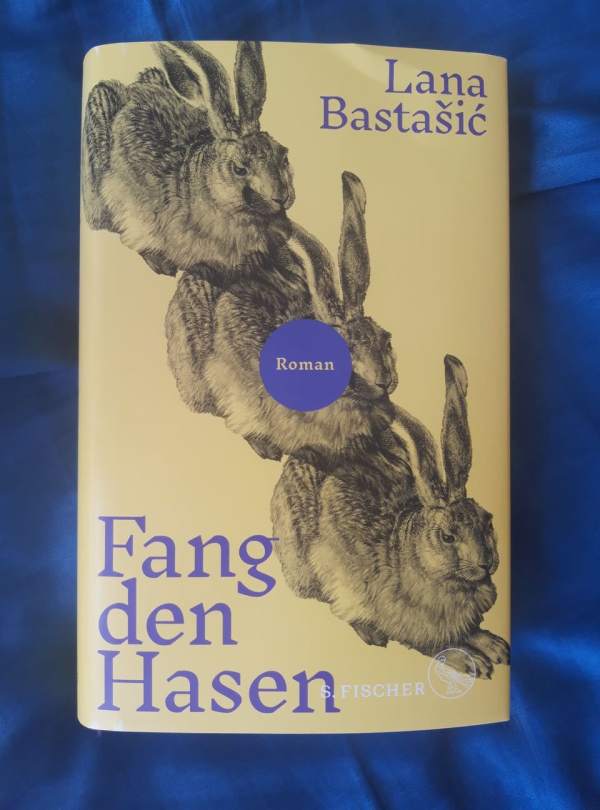
[Literatur] „Fang den Hasen“ von Lana Bastašić
Neben den unterschiedlichen Topoi Bosnien und Europa sowie der Reise zwischen beiden -- sowohl geographisch, als auch autobiographisch -- ist das Backend des Buches von großer Tiefe. "Fang den Hasen" kann auch als Jagd nach einer Beziehung und einer Freundschaft zwischen zwei Frauen gedeutet werden, die unterschiedlicher nicht sein könnten. Eigentlich scheinen beide sich permanent misszuverstehen, wobei Lejla über Sara dominiert und vieles in der Beziehung unausgesprochen bleibt. Bis Wien traut sich Sara nicht, nach Armin zu fragen, weil es jenen Zwischenfall gegeben hat, als Sara ihn quasi nebenbei für tot erklärt hat. Doch Armin ist für Lejla nicht tot: er ist verschwunden. Damit behandelt das Buch, wenn auch subtil, das Thema der Verschwundenen des letzten Krieges, und die Schwierigkeiten, mit denen Angehörige leben müssen, die nicht wissen, was mit ihren Verwandten und Freund*innen passiert ist.
[Bosnia] Ekspozej: Književni projekat „Bosna u Berlinu“
Rat u Bosni i Hercegovini je okončan prije više od 25 godina, neposred poslije užasnog vrhunca: genocida u Srebrenici. Ova 25. godišnjica je bila povod dvjema panel-diskusijama, organizovanim od katedre za južnu slavistiku na Humboldt-Univerzitetu u okviru Berlin Science Week @ HU, koje je moderirao historičar Thomas Schad. Nakon panel-diskusije, nastala je ideja za pisanje knjige „Bosnien in Berlin“ (Bosna u Berlinu). Pet mladih žena iz Bosne i Hercegovine, Srbije i Njemačke su izlagale raznolike perspektive u okviru ove diskusije i usprkos različite starosne dobi (i unatoč različitim doživljajima), sve govornice pak spaja jedno: s autobiografske ali i znanstvene strane se sve susreću i bave temom rata u Bosni i Hercegovini. Učesnice i učesnici manifestacije su imali osjećaj da njihove priče i doživljaji nisu ispričani do kraja. Potaknuti velikim javnim interesom i pozitivnim odjekom, donijeli su odluku da nastave pričati i pisati knjigu s radnim naslovom „Bosnien in Berlin“.
[Klima] „Cemre havaya düştü“: über die Aussagekraft einer anatolisch-balkanischen Bauernregel während des Hochklimawandels
Was am 19. Februar 2021 mit dem Wetter in Deutschland geschehen ist, halte ich für absolut bemerkenswert. Andererseits war dieser naturräumliche Vorgang offensichtlich auch sehr schwer in (deutsche) Worte zu fassen: dies zeigt allein ein Blick auf die Tagespresse, wo immer wieder das völlig unangemessene, stereotypische Understatement eines Hauchs von Frühling bemüht worden ist.1 Es... Continue Reading →
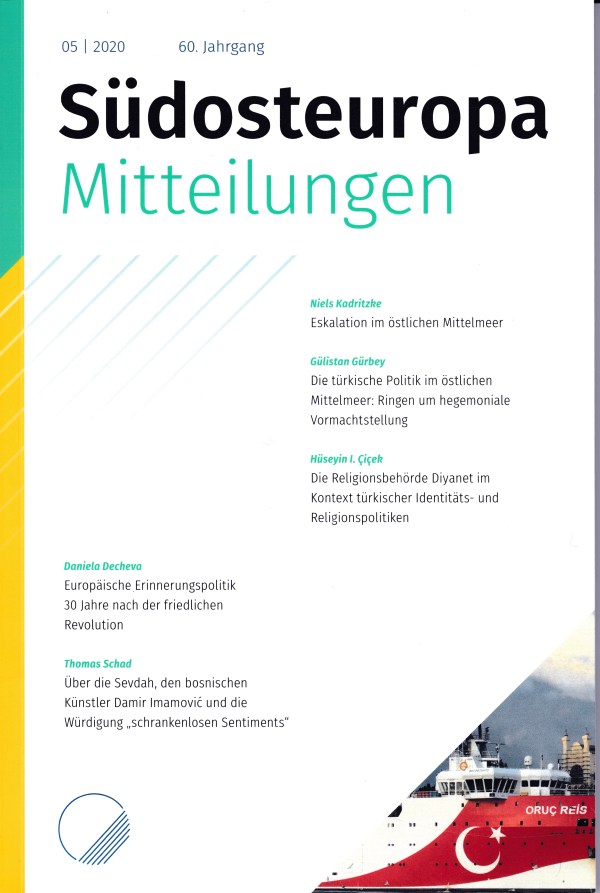
[Articles] Über die Sevdah, den bosnischen Künstler Damir Imamović und die Würdigung “schrankenlosen Sentiments”
This essay on the art genre Sevdah and its song form Sevdalinka, common across former Yugoslavia and centered in Bosnia and Herzegovina, evolved as a reponse to this year's German Record Critics' Award (Preis der deutschen Schallplattenkritik) to the Sarajevan artist Damir Imamović. Inspired by Imamović's 2013 lecture "On the ten most widespread delusions on... Continue Reading →
[Yorum] [Literatur] Selo gori, a baba se češlja
“Svijet gori, a Handke se češlja” (za Aidu, protiv rata) Ovo je bio moj komentar na Miljenka Jergovića, cijenjenog i dalje cijenjenog pisca, malo sam taj komentar možda i odredio i obradio, sigurno u njemu ima grešaka. Ali hej - šta je greška? Greške su za anuliranje dok su samo lijepo napisane. Jergović je iz... Continue Reading →
[Sprache] Nennen Sie Ihre Jezik* doch einfach wie Sie wollen
Die grundsätzliche Benennungsschwierigkeit der "Nachfolgesprachen des Serbokroatischen" Es besteht nach wie vor große Uneinigkeit darüber, wie die Sprachen zu nennen sind, die eine kluge Berliner Kollegin einmal sehr diplomatisch als "Nachfolgesprachen des Serbokroatischen" bezeichnet hat. Weiterhin besteht sogar Uneinigkeit und Zerwürfnis darüber, ob es sich überhaupt um mehrere Sprachen handelt – oder nicht vielleicht doch um... Continue Reading →
[Bosnia] The čardak defter — Olovo
In this moment, when I decided to write the čardak defter, I am in Olovo. I am sitting on a bank next to the river Stupčanica, whose riverbed is subdued by man-made rocky walls. I see the hotel Akvaterm next to me. The bank is built around a small česma (fountain), pouring warm thermal water... Continue Reading →
[Bosnia] In Bosnia II: On traditions and naming
As long as there is tradition, names can tell you a lot there, in Bosnia. But with traditions, it is complicated, not only there, and we will face many contradi(c)tions. Amongst people who come from the muslim tradition in Bosnia, it is an outspoken spiritual advise that names must be beautiful (lijepa imena). But there... Continue Reading →