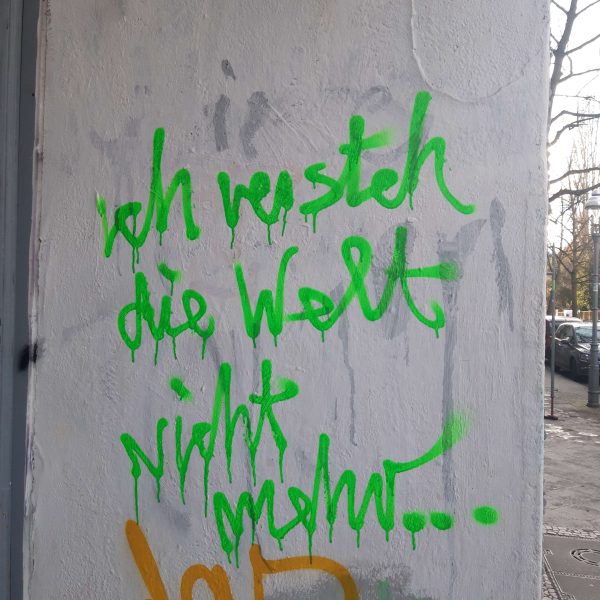
[NEOVOX] Die Waffen aus „High School Radical“, Zohran Mamdani als Messias, die Räusche des Jubeldschornalismus — und was uns der Kater noch bringt

Die berauschende Wirkung der Betrachtung Amerikas nach der Mamdani-Wahl mag eine spezifisch deutsche Note haben. Sie stillt aber bestimmt auch ein globales Bedürfnis nach Hoffnung, nach Feelgood, und zwar so, wie es Drogen tun: zur Selbstmedikation gegen die Übertrumpung. Doch wie fair ist es, Zohran Mamdani mit den Erwartungen an einen Heilsbringer zu überfrachten? Was ist vom journalistischen Echo zu halten – und welche Gefahren drohen aus einer waffenstarrenden und polarisierten Gesellschaft?

[Public Diplomacy] Conclusion: Turkish-Bosnian sibling cities and cross-border neo-populism (Part 9)

On this series: This blog post belongs to a series under the title and leading question „Can networks of local governments challenge the rise of cross-border neo-populism?“. The complete series are my contribution to an edited volume by Dr. Agata Rogoś, postdoctoral research fellow at Humboldt-Universität zu Berlin. Agata’s Edited volume’s working title is „Permeability... Continue Reading →

[Public Diplomacy] „We will reappropriate our forefathers‘ lands“: the ruling party and the Balkans (Part 6/8)

The Turkish ruling regime's problematic use of a vocabulary that appears to be identical with that of many Balkan post-migrants manifests in one of the goals of the AKP's „Vision 2023“ on its official homepage. There, a collective „we“ announces that „we will (re-)appropriate the reminiscences of our forefathers“ („Atayadigârlarımıza sahip çıkacağız”), with the historical Old Bridge of Mostar in the background. The same totemic language is applied on the homepage of TİKA, the Turkish Cooperation and Coordination Agency: „Turkey appropriates the monuments of the Ottoman reminiscences in the Balkans“ (Türkiye Balkanlar'daki Osmanlı Yadigârı Eserlere Sahip Çıkıyor). In a similar vein, the reminiscence (yadigâr) is more frequently paraphrased by the notion of the „Ottoman heritage“ (Osmanlı Mirası): thus, figurative kinship relations to the Balkans (heritage) are constructed. This figurative kinship is also expressed in countless other public speech acts, where Bosniaks and Turks are regularly called siblings (kardeş) and relatives (akraba), regardless of their biographies. Similarly, Bosnia, Kosovo, or other places were often called „home“ or declared identical with Turkey by Turkish officials. These samples show that the understanding of the nation-state itself and its borders was widened by the AKP regime throughout the past years, characterized by the use of kinship-metaphores. Concomitantly, the existing and conflictuous questions of belonging, ownership, sovereignty and territoriality in the Western Balkans were even amplified. 

[Public Diplomacy] ‚Hemşehrilik‘ (fellow-townsmenship) and the venture of Bosnian-Turkish sibling cities (Part 5/8)

As this example shows, being different from the others -- as Muhacir -- does not mean being other than Turkish: it rather means that there are one or more deep societal conflicts about the understanding how to be Turkish, and/or who determines what Turkish and Turkish culture would possibly be. I was told in practically every single interview with Bosniak Muhacirs (and their offspring) in Turkey what they perceive of as the most fundamental difference between themselves and 'the others': they would never -- down "to the seventh or ninth generation" -- ever marry their akraba (= relatives). Cousin marriage -- in the Arabic speaking Middle East described as bint 'amm marriage by anthropologists -- is in Turkey known as akraba evliliği. It is considered to be an eastern practice by Bosniak Muhacir people in Turkey, which corresponds to the fact that in the Balkans, cousin marriage is practically taboo and considered incestuous. Hence, the reactions of many Bosniak Muhacir people to the fact that some of their Anatolian compatriots practice it, often were expressed in extreme disgust. "Bunlar kültürsüz" -- they have no culture -- was often added as an explanatory comment. The importance of this societal conflict, where representatives of both sides can claim their own establishedness and the other side's outsiderness, should not be underestimated in the way how figurative kinship is established through sibling cities (kardeş şehir), either by representatives of the ruling party, or by Muhacir groups: even though representatives of both groups use the same kinship metaphores (like sibling / kardeş) and speak about culture (kültür), they may fundamentally disagree over the meaning and the role of their agnatic or figurative akraba (kinship) -- as the example of akraba evliliği shows. In the same vein, there are fundamental disagreements over the notion of culture, and the way how culture is brokered by official Turkish cultural centers and initiatives on the market of public opinions in the Balkans.

Website bereitgestellt von WordPress.com.

Nach oben ↑