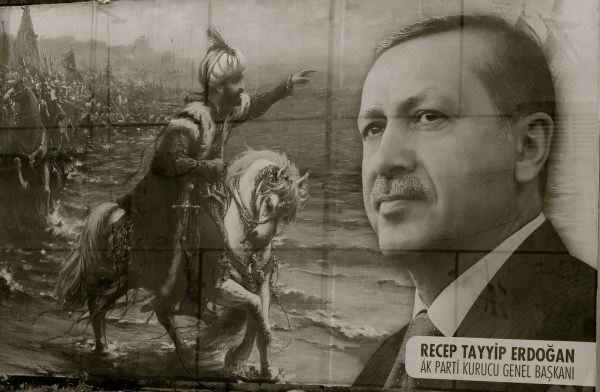
The stress of the Ottoman past in the official Turkish actors' cultural initiatives is the reason why their activities have been classified cultural diplomacy from the very beginning of their visibility in the Balkans. The year 2009, when the first branch of the Yunus-Emre-Cultural Centers opened its doors in the Bosnian capital Sarajevo, can be seen as a first significant benchmark. However, Turkish culture and cultural diplomacy are not only promoted in direct and subtle ways by offical representatives of the Turkish state: from the point of view of soft power – which according to Joseph Nye needs to work subtly in order to be successful – the popularity of Turkish TV-series was (and still is) of enormous relevance. Especially the latter aspect implies that an understanding of the appeal of “Turkish culture” in the Balkans cannot solely be explained by studying the ruling regime's activities: much broader strata of the involved societies (e.g. TV consumers/prosumers in Bosnia and Turkey) and their various discoursive contexts are, as informal actors, involved in the process of cultural diplomacy.
 DUNYALOOK