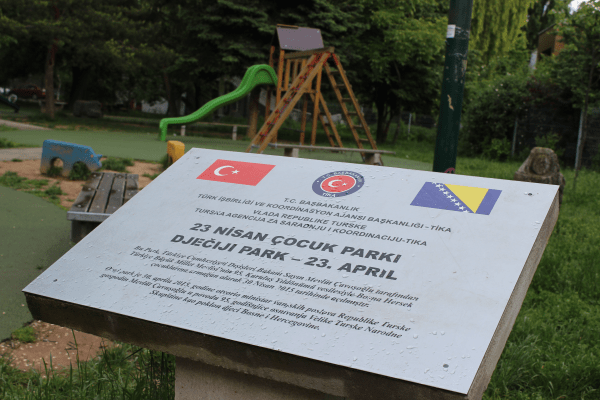
Whether free iftar meals, collective circumcision ceremonies for Balkan boys by Turkish circumcisers (sünnet şölenleri), renovations and constructions of mosques, hammams, fountains, public squares, bridges or similar activities: Turkish public diplomats' activities are disproportionally often religiously embellished. Yet, these activities are not pursued solely for altruistic reasons or for „their ‘magical value’, which Mauss saw was 'still present in sadaqa’“, as some authors have interpreted other forms of gift exchange under Islamic auspices. The gift, as Mauss had it, involves and demands reciprocity. In the case of Turkish-Bosnian cross-border neo-populism, a „mixed economy“ is at play between AKP-governed, Turkish municipalities and their Bosnian counterparts: spiritual categories are distinctively present – while they are blended and traded together with the „hard currencies“ of the capitalist market of public opinions. This means that the gifted („the invested“, „the helped ones“) are expected to deliver, in return, to their donor with consent and supportive public opinions.
[Public Diplomacy] „We will reappropriate our forefathers‘ lands“: the ruling party and the Balkans (Part 6/8)
The Turkish ruling regime's problematic use of a vocabulary that appears to be identical with that of many Balkan post-migrants manifests in one of the goals of the AKP's „Vision 2023“ on its official homepage. There, a collective „we“ announces that „we will (re-)appropriate the reminiscences of our forefathers“ („Atayadigârlarımıza sahip çıkacağız”), with the historical Old Bridge of Mostar in the background. The same totemic language is applied on the homepage of TİKA, the Turkish Cooperation and Coordination Agency: „Turkey appropriates the monuments of the Ottoman reminiscences in the Balkans“ (Türkiye Balkanlar'daki Osmanlı Yadigârı Eserlere Sahip Çıkıyor). In a similar vein, the reminiscence (yadigâr) is more frequently paraphrased by the notion of the „Ottoman heritage“ (Osmanlı Mirası): thus, figurative kinship relations to the Balkans (heritage) are constructed. This figurative kinship is also expressed in countless other public speech acts, where Bosniaks and Turks are regularly called siblings (kardeş) and relatives (akraba), regardless of their biographies. Similarly, Bosnia, Kosovo, or other places were often called „home“ or declared identical with Turkey by Turkish officials. These samples show that the understanding of the nation-state itself and its borders was widened by the AKP regime throughout the past years, characterized by the use of kinship-metaphores. Concomitantly, the existing and conflictuous questions of belonging, ownership, sovereignty and territoriality in the Western Balkans were even amplified.